
Black Male Psychologist
Your therapist’s identity, culture, and lived experience matters for your well-being.
Psychotherapy with a culturally informed perspective.
Share Your Vulnerabilities With Someone Who Gets It
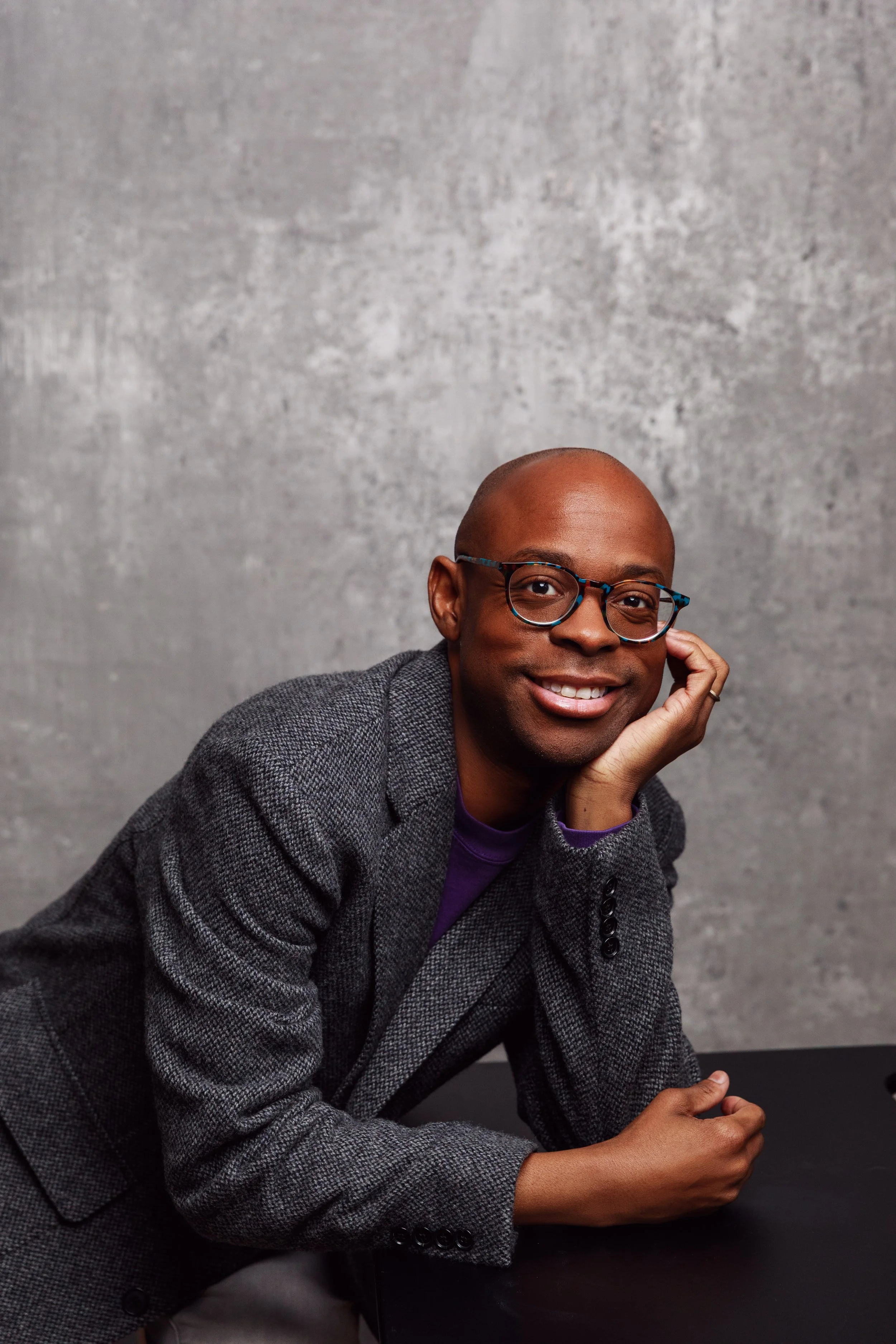
I’m a Black male psychologist and that matters. As a Black man, who is also a member of the LGBTQ+/same gender loving community, I have a lived experience that imbues my clinical work with a perspective and wisdom that can’t be achieved through clinical training alone.

Who Is Dr. Jonathan Mathias Lassiter?
At my heart, I am a Black boy from the South. I was raised in a traditional southern Black home in a working-class suburb of Augusta, GA. My life consisted primarily of school, home, and church. Raised as a devout Pentecostal Christian, I attended church at least twice a week from my earliest memories up until I was 18 years old. That experience instilled in me many values that still strengthen me today. It also implanted limiting ideas that I had to unlearn to heal myself.
In high school, I could no longer hide from two fundamental things about myself: my love for dance and my attraction to the same gender. Both of these things contributed to experiencing rejection from peers and loved ones. But both were too important for me to conceal and I eventually chose them and myself over the stigmatizing messages of others. Dance and my sexual orientation were also the catalysts for my own mental health journey that forced me to face the most vulnerable parts of myself. Part of that journey inspired me to become a mental health professional.
Now, I am a Black male clinical psychologist licensed in New York and New Jersey. I also am authorized to provide telehealth psychotherapy to clients in participating PSYPACT states. I offer psychotherapy for individuals, couples, and groups. I also provide corporate workshops for businesses looking to support the mental well-being of their employees. I specialize in culturally informed mental health care for Black, POC, and LGBTQ+ communities.
As a public intellectual, I’ve had the honor of sharing my scholarship in such outlets as Forbes, Journal of Black Psychology, NBC, PBS, American Psychologist, SiriusXM, The Lancet Psychiatry, and iHeart Radio. Overall, I’ve published more than 30 peer-reviewed journal articles and multiple book chapters. I’ve also presented my research at countless conferences for organizations such as the Association of Black Psychologists, Society of Behavioral Medicine, the American Public Health Association, and the Society for the Scientific Study of Sexuality.
I’ve authored two books. My trade press book, How I Know White People Are Crazy and Other Stories: Notes from a Frustrated Black Psychologist was published by Legacy Lit Books. In the book he tells his story of becoming part of the less than 1% of Black male psychologists, and explains how whiteness limits how we understand and practice mental health. The book is a commercial success and has been well-reviewed.
In addition, I’ve co-edited the award-winning text, Black LGBT Health in the United States: The Intersection of Race, Gender, and Sexual Orientation, published by Lexington Books. It is a first-of-its-kind textbook about the holistic health of Black sexually and gender expansive people.
As a high-achiever myself, I earned my PhD in Clinical Psychology from the California School of Professional Psychology in San Fransisco. I completed my doctoral internship in Clinical Health Psychology at the Richard L. Roudebush VA Medical Center in Indianapolis. My postdoctoral fellowship in clinical research was funded by the National Institute on Drug Abuse and was completed at Hunter College in New York City. I received advance training in health prevention research as a Visiting Professor in the Centers for AIDS Prevention Visiting Professor Program at the University of California, San Francisco. I have been a tenure-track faculty member at two colleges and universities. In my last faculty role, I recruited and trained Clinical Psychology PhD students.
After over a decade of an academic career, I transitioned into full-time private practice. Since then, I have acquired additional, specialized training in Emotionally Focused Couple Therapy; Acceptance and Commitment Therapy; African-centered Psychology; and the Unified Protocol for Transdiagnostic Treatment of Emotional Disorders.
I work with high-achieving professionals; LGBTQ+ professionals; Black professionals; artists/creatives; and activists. I love helping people do the difficult and rewarding work of healing and thriving.
The Difference A Black Same Gender Loving Male Psychologist Makes
My distinct clinical and relational perspectives include:
I’m thinking about culture, history, and systems. Your distress, your struggles aren’t just about what you’ve done or didn’t do. It’s not only about how you think or overthink. Our emotions are related to our histories: based in our family-of-origin and our culture.
For example, your mom may have been super strict and hypercritical of your grades and appearance. Now you feel self-conscious about your performance and how you look. Our work will delve deep into that. Alongside examining the ways in which the experience with your mom contributes to your distress, we’ll also look at the systems of white supremacy, the history of colonialism, and how racially charged brutality against children of color may have lead your mom to be overly fearful in her rearing of you.
We’ll look at how your elders’ and ancestors’ histories, not just your childhood, are influencing your present. I’m a history nerd and lover of cultures, so I know how to bring all these pieces together to help you better understand yourself in context and heal the wounds you’ve been carrying around.
I’m going to point out the things you can’t see related to your own privilege and disadvantage. We all exist at the intersection of individual identities and interlocking societal systems that can harm or benefit us. At times your gender could be something that contributes to us getting a raise over another colleague. At times your gender could also make it more likely that you someone grabs their purse when they are alone in the elevator with you. Your education and career status may afford you opportunities to travel the world and at the same time contribute to rejection from or entitlement among your family-of-origin. Oftentimes, you are experiencing these privileges and disadvantages without you fully understanding them.
When I work with you, I’m going to help bring these privileges and disadvantages to the fore so that we may see how they may serve you or hinder you. We’ll use them to help you develop agency, generate empathy for others, and practice self-compassion.
I’m going to help you challenge the gender, racial, and sexual boxes that you may be trapped in without knowing. Often I have clients who believe that they can’t ask for the sex they want because it’s “unlady like.” I have clients who think that if they say something that contributes to their spouse being upset, then they are abusive because “men shouldn’t make women cry or hurt their feelings.” Some of my clients find it hard to say “no” to projects at work and overpromise because they don’t want to be seen as “the lazy Black person.” I have some clients who are chronically burned out because they want to prove they aren’t “the minority hire,” so they are always going above and beyond. A lot of the clients who work with me are doing this without really even recognizing that they are trapped in stereotypical boxes, trying to prove or disprove something based on the spoken and unspoken expectations of others. I’ll help you gain awareness of these patterns and then find the courage to do something different.
I have navigated the challenge of having to be not just good but great to get to where you are in life. Many of my clients come to work with me because they grew up with people making them think they are not good enough or something is wrong with them. You may have been taught that you were weird because of the way you spoke. You may have heard that your gender presentation was unacceptable: “boys don’t act like that.” People may have made you feel ashamed of your body. You may have heard people comment about your skin color and how it was too dark or too light. These things made you feel like you had to work hard to make up for these things. You didn’t just achieve in school. You got the MBA, the Doctorate, the MD, the JD. You didn’t just get the job. You became the Managing Director, the CFO, the Artistic Director, the Lead Organizer. You started your own successful organization. You don’t just look good when you step out of the house, but you have on the designer pants. Your hair, makeup, and scent are impeccable at all times. You never let people see behind your mask. You may not even recognize when the mask is on anymore because you’ve worn it so long.
I’ll help you learn how to recognize when the mask is up. We’ll explore how being “the best,” being “number 1” is not serving you as well as you think. I’ll work with you to develop compassion for the person behind the mask so that you can thrive in a way that doesn’t require you deny the vulnerable and imperfect parts of yourself.
I know the rewards and burdens of being high-achieving. Part of the reason I became a doctor is because I wanted to compensate for liking boys. I thought, “I may be gay but my mom won’t reject me if I can buy her a house.” My insistence on making straight As was partly due to proving that I was not “the stereotype.” I was not a dumb Black boy who didn’t value education. Fighting to prove my worth and get away from others’ and my own internalized prejudice contributed to me becoming a highly successful person, it also contributed to a lot of pain. People see the awards, the book sales, the career, the public persona, but they don’t see the insecurities, the fear of getting it wrong, the energy drain of hours of rehearsing just to ensure that I was not just good but the best. People see your roses but not the cuts on your hands from the thorns. As a high-achieving Black male psychologist, I’m adept at helping my fellow high-achievers make space for the rewards and burdens of being high-achieving. In our work together, I won’t label you naming your pain as whining. You can be materially successful and still hurting.
You won’t have to explain every single thing about your culture to me; but I also won’t pretend I know it all. We can go deeper, faster because I get the context of navigating life as a person that the world sometimes treats differently just because of who I am. You don’t have to convince me that the nurse at the clinic treated you differently because of your sexual orientation. I believe you because it is a common experience backed by a body of research. Plus, I’ve lived it. I have felt the pain of that experience in my own body. I can help you identify, make space for it, and soothe it in your body. As much as I have read the books about, digested the research articles related to, conducted my own academic research studies focused on on, and lived the experience of a traditionally marginalized person, I also know that we are not all the same. So I’m coming to the table with a lot of knowledge and experience about cultures (contemporarily and historically) AND I still want you to share YOUR experiences with me. I want to hear it from your mouth. Take me inside your story. And if you hit a wall, I will use my expertise to help you find the language and uncover the emotions related to that experience that you never thought to tune into.
I don’t just hear you, I feel you. Research indicates that developing a therapeutic relationship with a therapist of your same race improves the collaborative, trusting partnership between a client and a therapist. It is this partnership that is the most important factor in helping clients achieve positive change. In our work together, you’ll have more than just a highly-trained doctoral-level therapist on your side. You’ll also have someone who will help you hold the pain, joy, and everything in between. We will cry, laugh, be confused, get angry, and be silent TOGETHER. Our relationship is professional (and guided by clinical rigor) and it’s also personal. I care about my clients as people. I’m always rooting for you.